The Anatomy of Exterior Degradation: A Comprehensive Guide to Facade Maintenance
How to manage facade peeling paint issues the structural and aesthetic integrity of a building’s exterior is subject to a constant, unforgiving barrage of environmental stressors. Among the most prevalent and misunderstood indicators of building decay is the delamination of protective coatings—commonly recognized as peeling paint. While superficial observers often categorize this phenomenon as a simple cosmetic failure, it frequently serves as a diagnostic symptom of deeper, systemic instabilities within the building envelope. Addressing this issue requires a move away from reactive, localized patching and toward a structured, lifecycle-oriented maintenance methodology.
To truly comprehend the nature of this degradation, one must view the paint film not as an isolated skin, but as a critical, multi-functional component of the building’s defense system. When this layer fails, it rarely happens in a vacuum; it is almost invariably the result of moisture dynamics, substrate incompatibility, or the breakdown of the underlying chemical bond between the coating and the masonry, timber, or metal beneath. Managing these failures requires diagnostic patience, as the symptoms observed on the surface often originate from structural mechanisms operating entirely out of view.
The following analysis provides an exhaustive framework for diagnosing, mitigating, and preventing the systemic failure of exterior coatings. It is intended to shift the practitioner’s perspective from mere surface remediation to holistic envelope stewardship, ensuring that interventions are both durable and fiscally responsible over the long term.
Understanding “how to manage facade peeling paint issues”
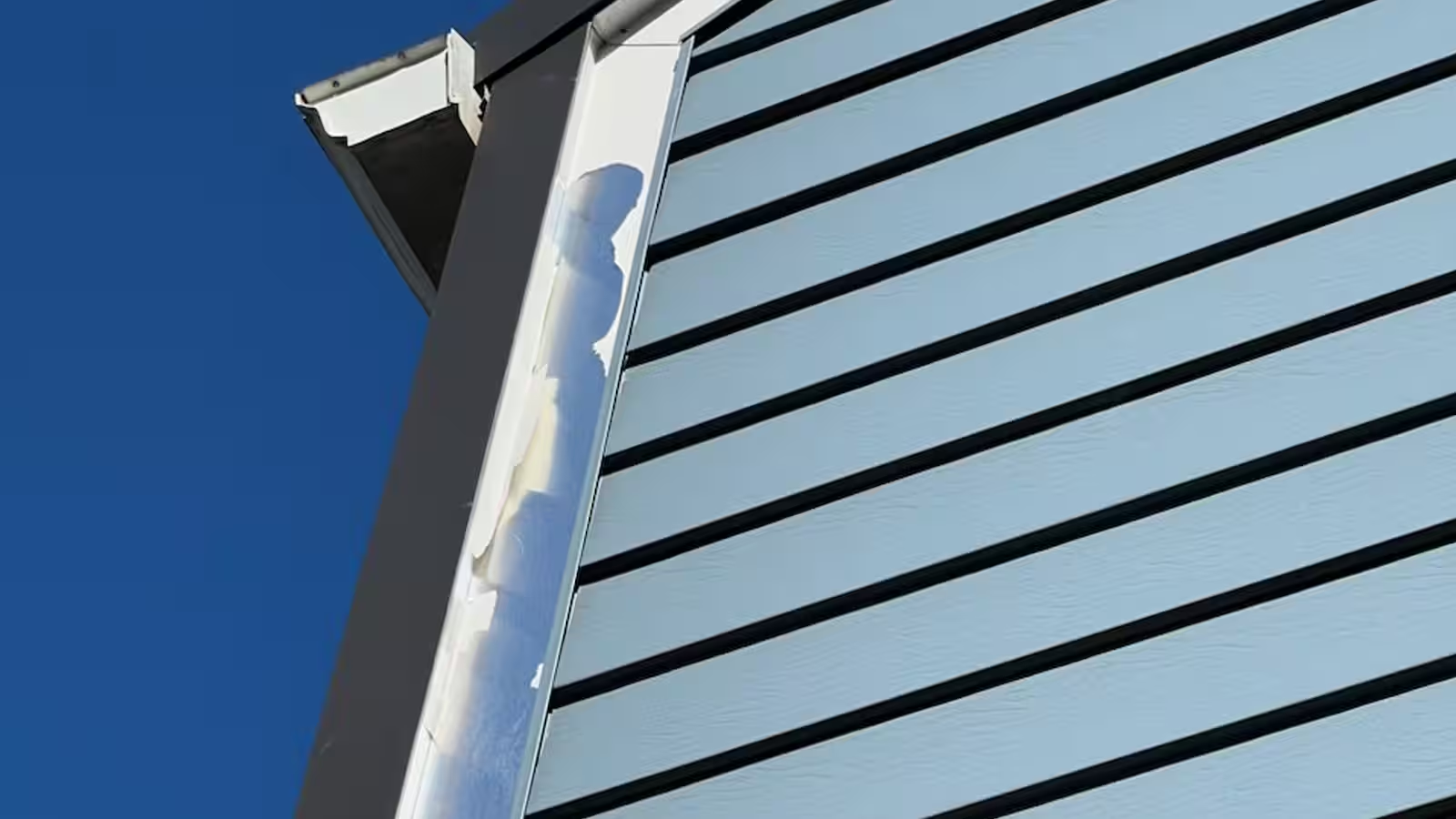
The challenge of mastering how to manage facade peeling paint issues begins with the rejection of the “paint-and-forget” mentality. Many property owners and facility managers approach peeling as a problem solved by scrapers and fresh primer, ignoring the reality that paint rarely peels without a catalyst. When a coating detaches, it is evidence of a failure in adhesion, cohesion, or substrate integrity.
A frequent misunderstanding is the assumption that the problem is inherently with the product being applied. In reality, the “product” is only one variable in a complex equation involving the dew point at the time of application, the moisture content of the substrate, the presence of efflorescence, and the compatibility of chemical binders. Oversimplifying these variables leads to cycle-of-failure loops where the facade is repainted every three to five years, incurring significant capital expenditure without addressing the underlying pathology.
To effectively manage these issues, one must act as a building pathologist. This requires identifying the mechanism of failure—whether it is moisture migration through the masonry, improper curing, or mechanical shear caused by thermal expansion—before selecting the remediation protocol. If the underlying cause remains unaddressed, the most expensive coatings on the market will fail with the same inevitability as the cheapest.
The Evolutionary Context of Exterior Coatings
How to manage facade peeling paint issues historically, exterior coatings were limited to breathable, sacrificial mineral-based paints (such as lime wash) that allowed moisture to move freely through the building envelope. The shift toward high-performance, synthetic polymer-based coatings in the mid-20th century revolutionized building maintenance by providing superior weather resistance, but it also fundamentally altered the physics of the wall assembly.
These modern coatings, while highly durable, are often less permeable than the substrates they cover. When moisture infiltrates the structure—whether through roof leaks, capillary action from the ground, or failing flashing—the synthetic coating acts as a barrier, trapping water behind the film. This trapped moisture, often carrying soluble salts, exerts pressure upon freezing or evaporation, forcing the coating away from the substrate. Understanding this history is crucial; much of our modern difficulty in managing facade issues is a consequence of trying to apply airtight technologies to breathable, historic, or high-moisture masonry environments.
Conceptual Frameworks for Diagnostic Maintenance
To navigate the complexities of facade remediation, facility managers should adopt the following mental models:
-
The Moisture Path Framework: Every facade issue is treated as a symptom of a moisture vector. If the paint is peeling, ask: Where is the water coming from? Where is it trapped? How can we restore the balance of permeability?
-
Substrate-to-Film Compatibility: This model posits that the mechanical bond is more important than the chemical composition of the paint. It focuses on the surface profile (profile depth and cleanliness) of the substrate.
-
Lifecycle Cost vs. Initial Capitalization: A framework for evaluating whether an intervention provides a return over 10, 20, or 30 years, rather than optimizing for the lowest immediate price per square foot.
Taxonomy of Coating Failures and Substrate Interactions
Coating failure is not a monolithic event. It manifests in distinct patterns, each pointing to a different causal agent.
Decision Logic for Remediation
When analyzing these failures, the decision logic should prioritize substrate preparation over product selection. If a facade is peeling due to saponification, no amount of “premium” paint will resolve the issue until the substrate is neutralized.
Detailed Real-World Scenarios How To Manage Facade Peeling Paint Issues
The Historical Masonry Unit
An older brick building shows significant peeling near the grade level.
-
Constraint: The brick is highly porous and historic.
-
Failure Mode: Rising damp.
-
Action: Sealing the surface with a modern acrylic will accelerate brick spalling. The correct approach is to remove the non-breathable layer and transition to a silicate mineral paint, which chemically bonds with the masonry and maintains vapor permeability.
The High-Rise Aluminum Curtain Wall
Peeling occurs specifically at the seams of panels.
-
Constraint: Thermal movement.
-
Failure Mode: Mechanical shear between the rigid coating and the moving metal panel.
-
Action: The solution is not a different paint but a flexible elastomeric sealant and an expansion-joint-compatible coating system that can accommodate microscopic shifts.
Planning, Cost, and Resource Dynamics
The economic management of facades requires budgeting for the entire restoration lifecycle, not just the coating application. Indirect costs—such as scaffolding, lead-based paint abatement, and moisture remediation—often dwarf the cost of the paint itself.
Facility managers should plan for a 20% contingency in any facade budget, as investigative work (stripping a test patch) often reveals hidden substrate defects that necessitate a change in scope.
The Risk Landscape: Failure Modes and Compounding Effects How To Manage Facade Peeling Paint Issues
Ignoring peeling paint is rarely a cost-neutral decision. Compounding risks include:
-
Substrate Degradation: Once the barrier is broken, freeze-thaw cycles can cause masonry to crack and spall.
-
Structural Corrosion: If the paint is peeling from steel elements, hidden oxidation can lead to a loss of load-bearing capacity.
-
Liability: Falling debris from loose paint or failing stucco creates a direct safety risk to pedestrians.
Long-Term Governance and Adaptive Maintenance
Effective management requires a shift from “corrective” to “predictive” maintenance. Establish a Facade Review Cycle:
-
Annual Visual Survey: Document all peeling areas using a consistent grid system.
-
Diagnostic Probing: Conduct moisture content tests on suspect areas during the rainy season.
-
Adjustment Triggers: If a specific area shows recurrent peeling, escalate from minor repair to a full substrate investigation.
Common Misconceptions and Oversimplifications How To Manage Facade Peeling Paint Issues
-
Myth: “Paint is a sealer.” Correction: Most exterior paints are designed to be breathable. True “sealers” are often the cause of underlying rot.
-
Myth: “Temperature doesn’t matter if it’s not raining.” Correction: Surface temperature, relative humidity, and the dew point are the three most critical factors in chemical adhesion. Applying paint when the substrate is too cold or too hot prevents proper cross-linking of the polymers.
-
Myth: “Power washing always helps.” Correction: High-pressure washing can force water into cracks, damaging the internal assembly and worsening the peeling issue in the long run.
Conclusion
The pursuit of excellence in facade maintenance is an iterative process that favors diagnostic rigor over shortcut solutions. Knowing how to manage facade peeling paint issues is essentially a test of how well one understands the building’s specific environment and its unique structural history. By prioritizing moisture mitigation, substrate integrity, and evidence-based material selection, property owners can transition from the cycle of perpetual repair to a model of sustained preservation. Success is measured not by the immediate visual appeal of a new paint job, but by the longevity of the entire building assembly.