The Architecture of Performance: Engineering the Building Envelope for Energy Efficiency
Best facade for energy efficiency the modern building facade has evolved from a simple physical barrier into a sophisticated environmental filter. As energy codes tighten and the demand for carbon-neutral assets grows, the facade’s role as the primary interface between the internal climate and the external environment has become the decisive factor in operational energy performance. The search for the optimal facade is not merely an exercise in material selection; it is a complex balancing act that reconciles thermodynamic performance, structural integrity, daylighting requirements, and long-term economic viability.
There is no singular, universal solution for facade performance because the “optimal” configuration is fundamentally tethered to local climatic demands, building occupancy patterns, and the specific geometry of the structure. A high-performance wall in a humid, tropical region serves an entirely different purpose than one designed for a high-latitude, heating-dominated climate. To achieve genuine energy efficiency, practitioners must shift away from prescriptive material choices toward a performance-based integration of envelope components.
This article examines the mechanisms of thermal transfer, the role of intelligent envelope design, and the methodologies required to evaluate facade systems. It addresses the systemic nature of the building skin, moving beyond individual product specifications to analyze how integrated systems—glazing, insulation, shading, and dynamic controls—work in concert to mitigate energy loss and enhance environmental resilience.
Understanding “best facade for energy efficiency”
Best facade for energy efficiency the pursuit of the “best facade for energy efficiency” is often derailed by the tendency to seek a silver-bullet technology. Many stakeholders default to high-R-value materials or specialized glazing, assuming these components alone will optimize the building’s thermal footprint. However, the facade is a system, not a product.
A fundamental misunderstanding persists that higher insulation values are always better. In reality, the thermal mass of a building’s facade can be either an asset or a liability depending on the diurnal temperature swings of the site. In climates with high day-night temperature fluctuations, heavy facade systems that absorb heat during the day and release it at night can significantly reduce cooling loads. Conversely, in stable, warm climates, a lightweight, highly reflective, and well-ventilated facade may prove superior.
Furthermore, the “best facade for energy efficiency” is frequently conflated with architectural aesthetics. Glass-heavy facades, while visually desirable, often introduce significant thermal bridging and solar heat gain issues. Addressing these requires complex, often expensive mitigation strategies, such as automated external shading or specialized low-emissivity coatings. True mastery involves moving beyond the “wall-as-barrier” model toward an “envelope-as-mediator” model, where the facade dynamically responds to the environment to minimize the mechanical energy required to maintain human comfort.
Conceptual Frameworks for Envelope Performance Best Facade For Energy Efficiency
To assess facade systems, professionals often rely on several established mental models. These frameworks help categorize performance requirements and identify potential failure points.
-
The Thermodynamic Buffer Model: This treats the facade as a multi-layered filter rather than a single plane. By creating intermediate air spaces—such as those found in double-skin facades—the envelope can use convection to dissipate heat before it reaches the interior, or trap it to create an insulating barrier during winter.
-
The Dynamic Equilibrium Framework: Unlike static wall systems, this model assumes that the building’s needs change hourly and seasonally. It prioritizes systems that can adapt—via kinetic shading, variable-opacity glazing, or natural ventilation pathways—to minimize the gap between current environmental conditions and the building’s set-point requirements.
-
The Embodied vs. Operational Carbon Balance: This framework mandates a lifecycle approach. It warns that a facade system with exceptional operational energy performance may be disqualified if its production or installation requires an prohibitive amount of “embodied carbon.” The most efficient systems are often those that balance high thermal resistance with low-impact, modular, or recyclable material lifecycles.
Categories of High-Performance Facade Systems
Facade systems generally fall into several distinct categories, each with inherent trade-offs regarding cost, thermal performance, and maintenance.
Decision Logic for System Selection
-
Climate Assessment: Define the primary load—heating (insulation priority) or cooling (shading/thermal mass priority).
-
Orientation Analysis: The “best facade for energy efficiency” will vary significantly by face. A southern facade (in the Northern Hemisphere) benefits from high-performance shading, while northern exposures should prioritize high thermal resistance.
-
Mechanical Synergy: The facade must be designed in tandem with the HVAC system. If the building utilizes passive ventilation, the facade must incorporate operable elements that do not compromise the airtightness required during the heating season.
Real-World Scenarios and Failure Modes Best Facade For Energy Efficiency
The Glass-Heavy Commercial Tower
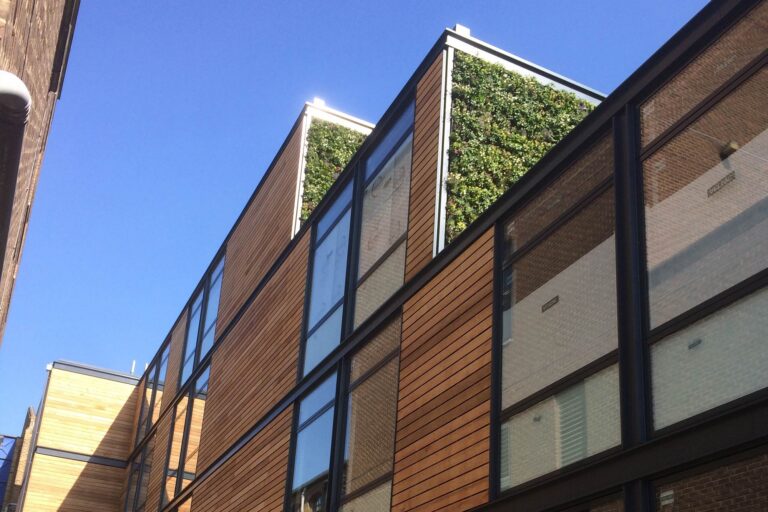
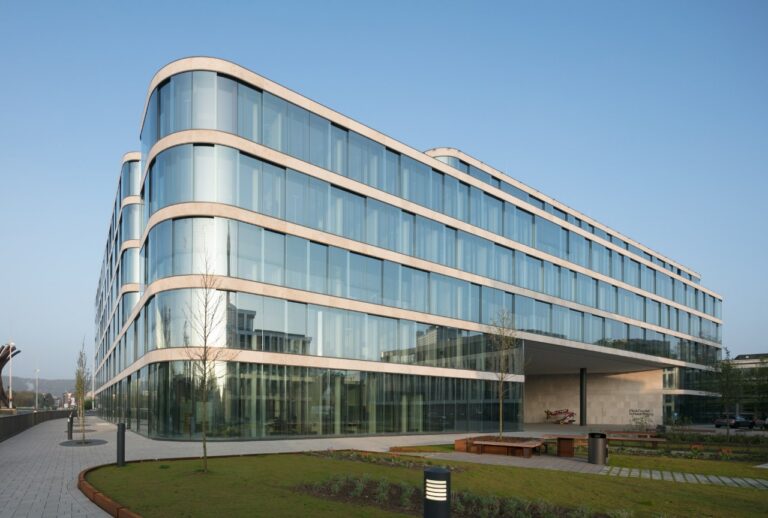
In highly glazed office buildings, the failure mode is often localized overheating (“hot spots”) near the perimeter. While the glazing may be high-performance, the sheer area allows significant solar gain. The common correction is the retrospective addition of internal blinds, which are ineffective because the heat has already entered the thermal envelope. The optimal solution, which should be integrated during design, involves external shading devices that block radiation before it strikes the glass.
The Residential Retrofit
When improving an existing, poorly performing home, the risk is sealing the structure too tightly without adequate mechanical ventilation. The facade can be improved through exterior insulation and finish systems (EIFS), but this must be paired with controlled air exchange to avoid trapping indoor moisture, which leads to mold and degraded indoor air quality.
Planning, Costs, and Resource Dynamics
The economic analysis of the “best facade for energy efficiency” often overlooks indirect costs. While initial capital expenditure is higher for high-performance envelopes, the reduction in required HVAC capacity—often referred to as “right-sizing”—can offset some of these costs.
Opportunity cost is another critical factor. Investing in a high-cost, high-tech facade might divert funds from other critical systems. A disciplined approach identifies the point of diminishing returns—where additional insulation or glazing performance yields negligible energy savings relative to the cost.
Governance, Maintenance, and Long-Term Adaptation Best Facade For Energy Efficiency
A facade is a living system that degrades. The most efficient design is irrelevant if it is not maintained.
-
Review Cycles: Conduct infrared thermography surveys every 3–5 years to identify thermal bridges, insulation gaps, or failed sealants.
-
Adjustment Triggers: If occupancy patterns or usage profiles change—such as an office space converting to a 24/7 data center—the facade’s thermal strategy may require calibration, such as adjusting external shading schedules or updating smart-glazing set-points.
-
Layered Maintenance Checklist:
-
Inspect and clean air seals and gaskets.
-
Verify the functionality of automated shading and sensors.
-
Check drainage paths in ventilated or double-skin systems to ensure no blockage is trapping moisture.
-
Measurement, Tracking, and Evaluation
True efficacy must be measured through data, not assumptions. Leading indicators—such as the calculated U-value and air-leakage test results during commissioning—are essential, but lagging indicators are the ultimate test.
-
Quantitative: Monitor the Energy Use Intensity (EUI) of the building, specifically disaggregating heating and cooling loads to see if the facade performance correlates with seasonal climate changes.
-
Qualitative: Conduct occupant comfort surveys. A “perfect” facade that results in occupant thermal discomfort (e.g., glare or cold radiant surfaces) is ultimately a failure.
-
Documentation: Maintain a comprehensive log of facade performance, including initial commissioning data, energy audits, and a record of any modifications made to the envelope over the building’s lifecycle.
Common Misconceptions and Oversimplifications Best Facade For Energy Efficiency
-
“High R-values solve everything.” R-value is only one metric. Thermal mass, air leakage, and thermal bridging are equally, if not more, important in dynamic climates.
-
“Smart facades are always efficient.” Any technology that relies on sensors and actuators can fail. If a smart facade defaults to a closed, opaque position during a system glitch, it may increase the demand for artificial lighting, nullifying energy savings.
Conclusion
Determining the “best facade for energy efficiency” requires a rejection of prescriptive, product-focused thinking in favor of a site-specific, integrated systems approach. There is no shortcut to performance; it is the result of rigorous energy modeling, careful material selection, and a committed strategy for long-term maintenance. By understanding the facade as a dynamic interface capable of mediating the relationship between the built environment and the natural one, architects and engineers can create structures that are not only efficient but resilient to the shifting demands of climate and use. The most successful projects are those that acknowledge the inherent complexities of the envelope and treat every design decision as a component of a larger, systemic whole.