Resilience at the Shore: Engineering the Best Facade for Coastal Environments
Best facade for coastal environments coastal architecture exists in a state of perpetual negotiation with nature. Unlike inland structures that largely contend with gravity and seasonal thermal cycling, buildings situated within the maritime influence zone are subjected to a constant, chemically aggressive bombardment. Salt-laden moisture, high-velocity winds, and intense ultraviolet (UV) radiation create a compounding environmental load that renders conventional facade assemblies inadequate.
Designing for these conditions requires moving beyond aesthetic preference toward an architectural philosophy of material longevity and system-level resilience. The challenge is not merely to select a single “durable” material, but to curate an integrated assembly that respects the thermodynamics and chemical kinetics of the seaside environment.
To achieve long-term success, one must move past the concept of the facade as a static outer shell. Instead, it must be treated as a sophisticated, multi-layered filter—a dynamic buffer that manages moisture, mitigates chloride ingress, and maintains its performance integrity despite the persistent corrosive pressure of the ocean.
Understanding “best facade for coastal environments”
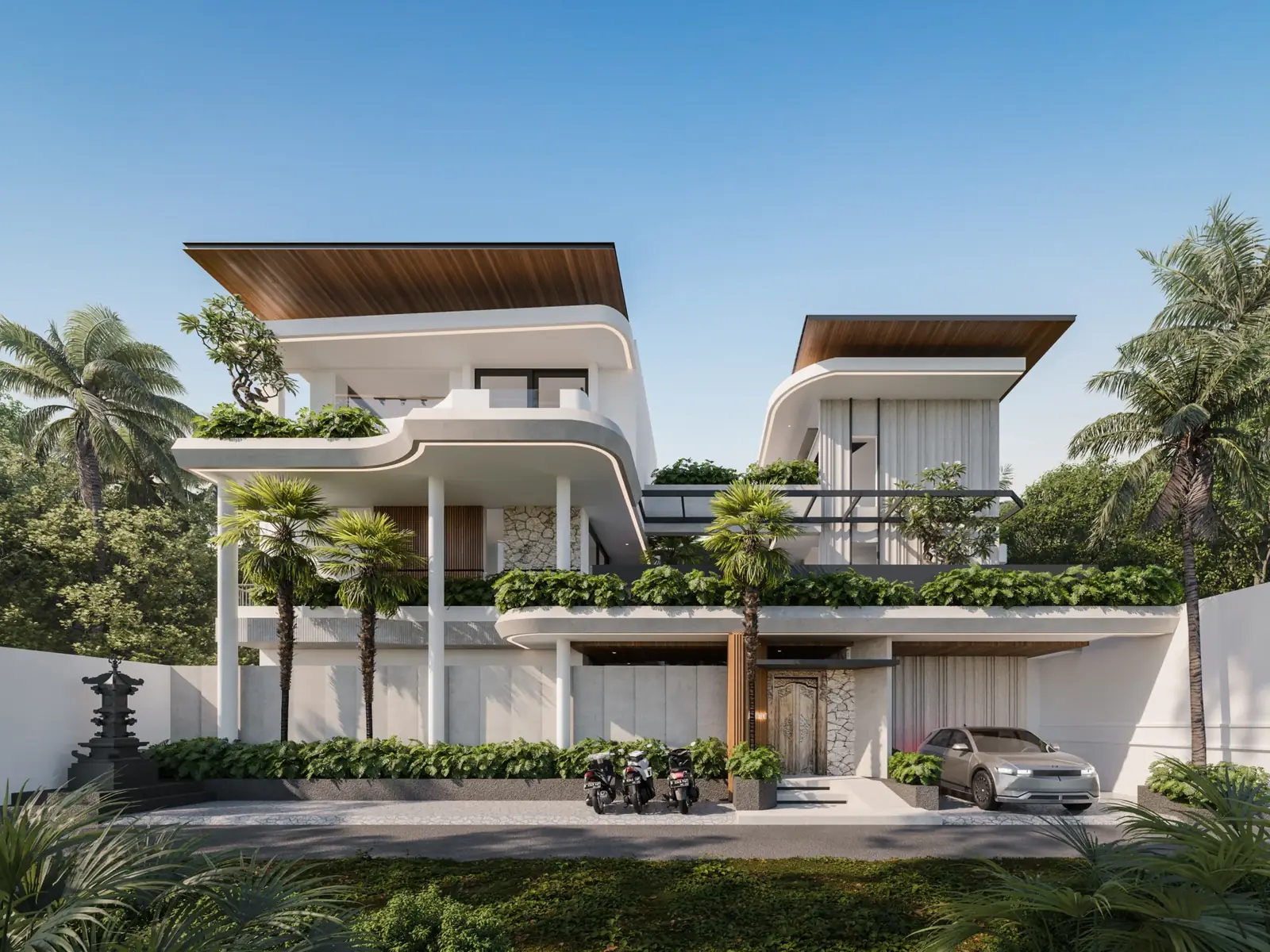
The term “best facade for coastal environments” is frequently misused in design discourse, often treated as a binary choice between “expensive/durable” and “affordable/replaceable.” In reality, this classification is a fallacy. There is no singular, universal “best” solution. The optimal facade is entirely contingent upon the specific micro-climate, the building’s proximity to the mean high-tide line, and the accepted maintenance horizon.
Misunderstandings often stem from ignoring the “hidden” elements of a facade. While an owner may focus on the cladding—the visible skin—the true failure point in coastal construction is almost invariably the assembly’s sub-structure, fasteners, and sealant joints. A high-performance metal panel is rendered ineffective if it is attached with standard zinc-plated screws that oxidize within eighteen months.
True mastery of coastal design requires a shift from selecting materials for their “raw” properties to evaluating them within the context of their “installed” performance. The best facade is one where the system’s weakest link—the connection—is as durable as its most robust surface.
Deep Contextual Background
Best facade for coastal environments historically, coastal architecture utilized locally sourced, sacrificial materials. Thick masonry, heavy timbers, or lime-rendered surfaces were designed with the understanding that they would weather rapidly and require regular, labor-intensive maintenance. These vernacular forms worked because they allowed for breathability—moisture trapped behind a non-permeable skin is the primary driver of catastrophic failure in modern high-performance envelopes.
The late 20th-century transition to airtight, sealed, and thin-profile facades introduced a fundamental clash with coastal physics. By prioritizing energy efficiency and slick aesthetics, modern construction often inadvertently traps chloride-rich moisture against structural steel, accelerating carbonation and corrosion at rates far exceeding those of traditional, porous assemblies. The current era of coastal design is essentially a corrective phase, re-integrating the lessons of breathability and material compatibility into the modern, high-tech envelope.
Conceptual Frameworks and Mental Models
To navigate the design process, professionals utilize several frameworks to evaluate risk and performance:
-
The Chloride-Exposure Gradient: This model categorizes buildings by distance from the shoreline (e.g., < 0.5 miles, 0.5–3 miles). The intensity of chemical attack shifts from direct saltwater spray to airborne aerosolized salt, necessitating different metallurgical and chemical defenses at each interval.
-
The Four-Barrier Logic: Every facade must effectively manage (1) water shed, (2) air pressure differentials, (3) thermal bridging, and (4) vapor diffusion. In coastal zones, the continuity of these barriers is paramount, as any break allows pressurized, salt-heavy air to penetrate the cavity.
Key Categories and Material Performance
When evaluating the best facade for coastal environments, performance generally falls into these categories:
Note: The performance of these materials is heavily reliant on the secondary support structure, which must be stainless steel (316 grade or higher) or non-metallic composite.
Detailed Real-World Scenarios Best Facade For Coastal Environments
-
The High-Exposure Shorefront: A residential structure within 100 yards of the ocean requires a “rainscreen” approach. By allowing air to circulate behind the cladding, the system prevents the accumulation of salt deposits and moisture, regardless of the material used.
-
The Mid-Zone Residential Tower: Here, wind load is the primary constraint. Rigid systems like aluminum composite panels (ACPs) are effective, provided the installation uses pressure-equalized joints to prevent the “pumping” of salt-laden air into the building cavity.
-
The Coastal Retrofit: When upgrading an older structure, the focus is on the compatibility of new systems with existing, potentially degraded, substrates. Applying a new “skin” without addressing trapped moisture in the original wall will only accelerate structural rot.
Planning, Cost, and Resource Dynamics
The economic reality of coastal construction is that initial capital expenditure (CAPEX) is a misleading metric. A cheaper material with a five-year replacement cycle is rarely the “best facade for coastal environments” compared to a premium material with a thirty-year service life.
Opportunity costs are often ignored; a facade that requires annual scaffolding for cleaning or repair disrupts operations, impacts occupancy, and adds hidden logistical expenses.
Risk Landscape and Failure Modes Best Facade For Coastal Environments
The primary risks are not static but compounding. Salt air causes minor rust at a fastener, which expands, cracking the adjacent cladding. This crack allows more moisture in, leading to spalling, which compromises the moisture barrier, eventually allowing water into the structural core.
-
Galvanic Corrosion: Occurs when two dissimilar metals touch in the presence of salt-saturated moisture. This is the most common cause of premature facade failure.
-
Efflorescence and Sub-florescence: Salts crystallizing within masonry pores, exerting internal pressure that causes the material to crumble from the inside out.
-
UV-Induced Brittleness: The intense, unfiltered light of the coast degrades the binders in coatings and sealants, leading to premature cracking and water ingress.
Governance, Maintenance, and Long-Term Adaptation
A maintenance program is not merely a “cleaning schedule.” It is an active management system.
-
Annual Visual Review: Using drones or high-resolution imaging to identify early signs of coating failure or rust staining.
-
Cyclical Sealant Renewal: Sealants typically have a 10–20 year life. Proactive replacement prevents the “water-pump” effect that causes unseen damage behind the cladding.
-
Freshwater Rinsing: Regular low-pressure rinsing of exterior surfaces in high-spray zones significantly reduces the “salt-load,” extending the life of coatings and metallic surfaces.
Measurement, Tracking, and Evaluation Best Facade For Coastal Environments
Evaluation should rely on both lagging and leading indicators.
-
Lagging indicators: Visible corrosion, structural spalling, energy efficiency drops.
-
Leading indicators: Salt-deposition rates on test coupons, the state of sacrificial fasteners, and the elasticity/adhesion levels of sealants.
Documentation is critical. A “digital twin” or an annotated, log-based facade history—capturing every repair, cleaning, and material specification—is the most valuable asset an owner can maintain.
Common Misconceptions and Oversimplifications
-
“Stainless steel is immune to rust.” In coastal environments, even 316-grade stainless steel can “tea stain” or corrode if not periodically cleaned of chloride deposits.
-
“Painting is a permanent solution.” Paint is a sacrificial layer. It requires a specific, planned re-coating cycle.
-
“Sealing the wall is always better.” Forcing a wall to be 100% impermeable often traps moisture, leading to faster degradation than a breathable system would.
Conclusion
The pursuit of the best facade for coastal environments is a pursuit of environmental harmony through technical precision. It requires an acknowledgment that the ocean is an active, persistent participant in the building’s lifecycle. The durability of a coastal structure is directly proportional to the degree to which its designers have respected the reality of the sea.