The Envelope Strategy: Engineering Durability and Aesthetic Intent in Cladding
Best exterior cladding options the selection of a building’s exterior skin is an exercise in managing competing performance requirements. Cladding acts as the first line of defense against hydrothermal stress, mechanical impact, and ultraviolet radiation, while simultaneously establishing the building’s visual dialogue with its environment. In professional practice, the envelope is not a decorative finish but a complex assembly that must facilitate moisture transport, support thermal insulation, and ensure long-term structural integrity.
As building codes trend toward more stringent energy efficiency standards, the traditional role of exterior cladding has expanded. Modern assemblies now incorporate rainscreen principles, pressure-equalized joints, and sophisticated sub-framing systems designed to mitigate the risks of interstitial condensation and thermal bridging. These technical requirements necessitate a departure from aesthetic-first decision-making, demanding instead an analytical approach rooted in building science and material lifecycle analysis.
Developing a robust facade strategy requires a deep understanding of environmental context. A material that performs flawlessly in an arid, high-altitude climate may succumb to biological growth or corrosive degradation in a humid coastal region. This article explores the systemic complexities of the building envelope, providing a comprehensive reference for professionals who view the facade as a critical, long-term asset rather than a superficial choice.
Understanding best exterior cladding options
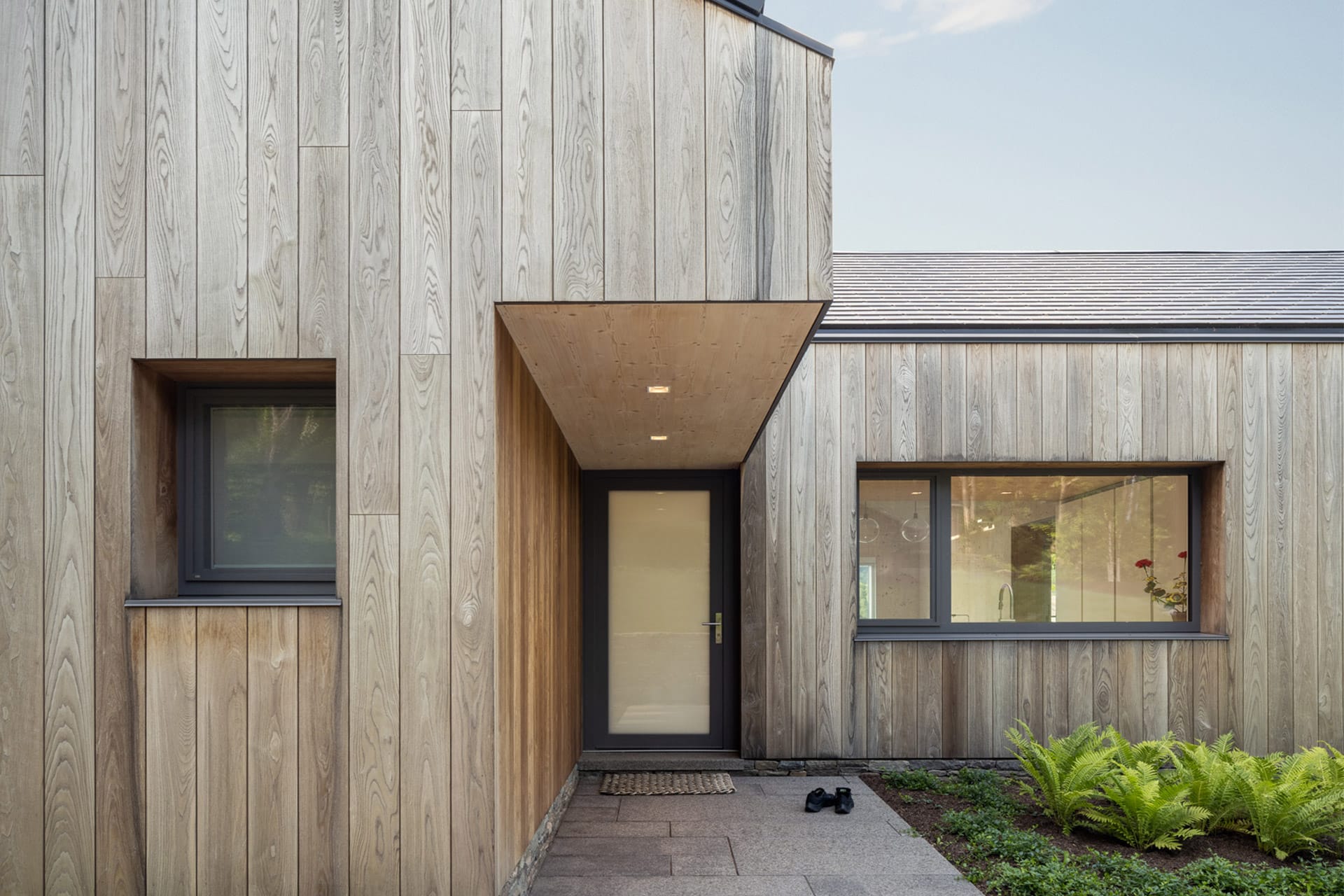
The search for the best exterior cladding options often suffers from the fallacy of universal excellence. In engineering terms, there is no single “best” material; there is only the material that most accurately satisfies the specific intersection of a project’s site-specific stressors, budgetary constraints, and maintenance capabilities. Misunderstandings frequently arise when stakeholders prioritize initial installed cost or visual similarity to past projects without accounting for the unique micro-climatic or structural demands of the current build.
When professionals discuss the best exterior cladding options, they are implicitly referencing a matrix of properties: moisture vapor permeability, fire resistance, coefficient of thermal expansion, and ease of remediation. The risk of oversimplification is high; for example, a high-performing fiber-cement panel may be structurally superior in one application but fail in another if the ventilation gap behind the panels is not correctly detailed to facilitate rapid drying.
To determine the most appropriate system, one must adopt a holistic view. The design process must evaluate the cladding as part of a larger assembly. By shifting the focus from “which material is the best” to “which assembly manages risk most effectively,” designers can move toward a more resilient architecture that sustains its performance throughout the building’s lifecycle.
Historical Evolution: The Shift from Load-Bearing to Rain-Screen
Best exterior cladding options historically, the exterior wall was an monolithic entity, providing both structural support and weather protection. As buildings evolved into steel or concrete-framed structures, the wall became a non-load-bearing “curtain” or “skin.” This development allowed for greater architectural freedom but introduced the significant problem of water management.
Early 20th-century thin-wall construction often relied on face-sealed systems, which attempted to keep water out by creating a perfectly airtight barrier—a strategy that rarely succeeds long-term. The paradigm shift toward the pressure-equalized rainscreen system in the latter half of the century represented a fundamental maturity in building science. Modern best exterior cladding options are almost exclusively designed to accommodate this shift, utilizing ventilated cavities to manage the inevitable ingress of moisture through pressure equalization and gravitational drainage.
Conceptual Frameworks for Material Selection Best Exterior Cladding Options
-
The Hygrothermal Equilibrium Model: This framework evaluates how a material handles moisture. It asks whether the assembly promotes drying or traps moisture, focusing on the drying potential of the specific cladding choice in its climate.
-
The Durability-to-Maintenance Ratio: A financial model that assesses the lifecycle cost of a material. It requires projecting not just the initial investment, but the frequency and intensity of necessary interventions to maintain performance over a 20- to 50-year horizon.
-
Structural Interdependency: A design principle where the weight of the cladding and the attachment method are modeled as part of the primary structural load, ensuring that thermal expansion does not compromise the fasteners or the substrate.
Categories of Cladding and Comparative Performance
Evaluating the best exterior cladding options requires comparing these categories against the project’s specific “limiting factor,” whether that is weight, budget, or environmental exposure.
Real-World Scenario Modeling
-
Coastal Salt-Spray Environment: The primary constraint is corrosion. The decision logic rejects exposed carbon steel fasteners in favor of 316-grade stainless steel or specialized non-metallic anchors. The risk of ignoring galvanic action is extreme.
-
High-Latitude Deep Freeze: The design priority shifts to thermal bridging. The selected cladding system must accommodate thick layers of continuous exterior insulation, requiring long-span sub-framing that minimizes thermal bypass.
-
High-Density Urban Infills: Acoustic isolation is the critical constraint. The assembly must utilize high-mass cladding components to reduce sound transmission, which often influences the selection of stone or heavier masonry over lightweight metal panels.
Planning, Cost, and Resource Dynamics Best Exterior Cladding Options
The economic analysis of cladding must look beyond the procurement stage.
-
Initial Costs: The purchase price of materials and the cost of labor-intensive installation.
-
Indirect Costs: Potential premiums for specialized labor required by complex proprietary systems.
-
Opportunity Costs: The time lost if a material choice necessitates longer lead times or weather-dependent installation windows.
The Risk Landscape: Failure Modes
Cladding failures typically originate in the joints, not the panels. The taxonomy of failure includes:
-
Sealant fatigue: Loss of elasticity due to extreme UV exposure or expansion cycling.
-
Fastener failure: Shearing or corrosion resulting from improper material matching.
-
Ventilation blockage: Debris or poor detailing stopping the air flow in the rainscreen cavity, leading to trapped moisture and structural rot.
Governance, Maintenance, and Long-Term Adaptation Best Exterior Cladding Options
Effective governance of the exterior envelope requires a formal maintenance manual. This document establishes inspection intervals and provides clear triggers for intervention. For instance, a crack width exceeding a specific threshold in a masonry facade serves as an automatic trigger for professional structural review. Similarly, checking the integrity of drainage exits in a rainscreen system should be part of every biannual facility inspection.
Deconstructing Common Industry Myths
-
Myth: Maintenance-free cladding exists.
-
Myth: Exterior insulation negates the need for a water barrier.
-
Myth: Thicker materials are inherently stronger.
Conclusion Best Exterior Cladding Options
Achieving long-term performance in a building envelope is a result of discipline, not chance. By prioritizing system integration over superficial aesthetic trends, and by rigorously evaluating materials through the lens of local environmental stressors, architects and engineers can select the best exterior cladding options for their specific context. The resilience of a building depends on the integrity of its skin; when that skin is engineered with precision, the structure gains the capability to withstand the test of time.