The Persistence of Appearance: Engineering Facades Against Chromatic Degradation
How to avoid facade material discoloration the visual integrity of a building’s exterior is perhaps the most scrutinized, yet least understood, aspect of its long-term performance. Discoloration—whether manifesting as metallic oxidation, organic staining, or the gradual leaching of minerals—represents a breakdown in the dialogue between the building envelope and its environmental context.
For the architect and the facility manager, the mandate is clear: aesthetics must be designed for, not merely hoped for. True mastery of this discipline involves a forensic approach to material science, where the specific chemical reactivity of stone, glass, or metallic cladding is reconciled with the site’s unique atmospheric profile. When surfaces are designed without accounting for the movement of water—the primary vector for staining—the resulting discoloration becomes an architectural certainty rather than a maintenance exception.
Understanding “how to avoid facade material discoloration”
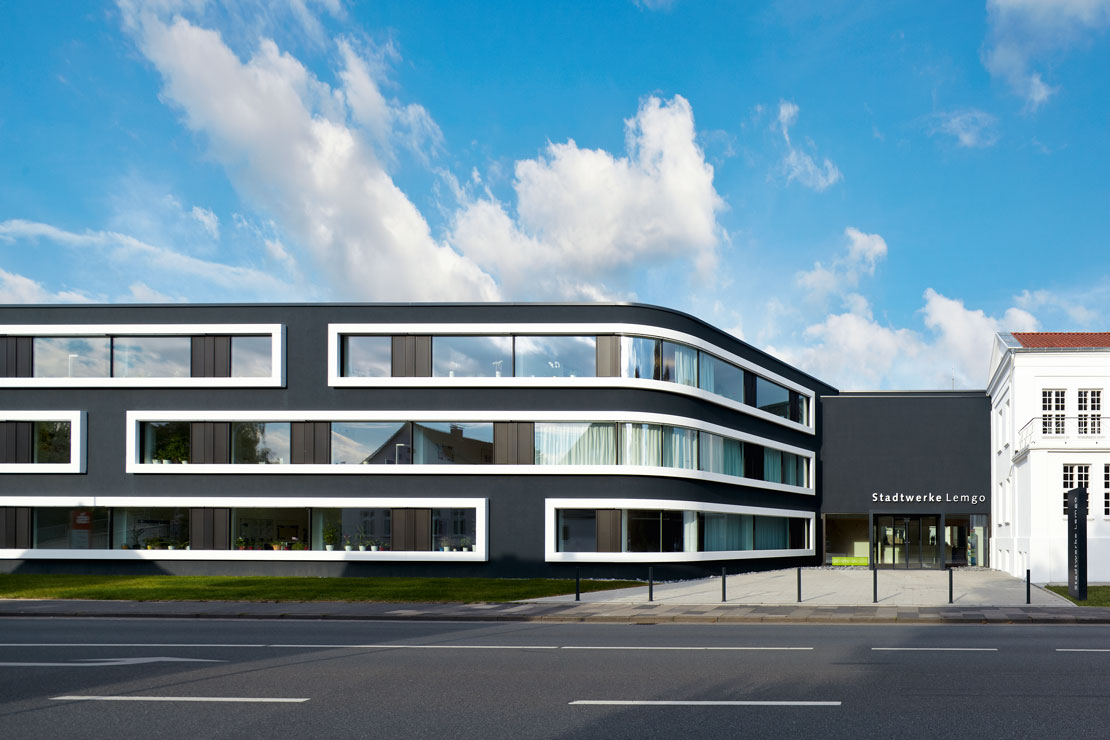
The challenge of how to avoid facade material discoloration is frequently approached as a problem of after-the-fact remediation rather than proactive design. Many practitioners assume that specifying a “high-performance” finish is a panacea, ignoring the fact that any material, if positioned in an environment where moisture is allowed to accumulate, will eventually succumb to discoloration.
A primary misunderstanding in the pursuit of how to avoid facade material discoloration is the role of surface texture. Smooth, polished surfaces are often chosen for their modern aesthetic, but they offer the least forgiveness when it comes to particulate accumulation. Rougher textures can trap pollutants, while perfectly smooth ones reveal even the most minor changes in reflection.
Deep Contextual Background: The Evolution of Surface Sensitivity
How to avoid facade material discoloration the late 20th century saw a shift toward “heroic” facade materials—light-colored precast concrete, bright anodized aluminum, and large-format limestone—that required pristine conditions to remain aesthetically legible. As these structures aged, the industry realized that the “clean” modern look was exceptionally difficult to maintain in urban centers where industrial pollutants, vehicle emissions, and mineral-heavy rainwater were the norm.
Conceptual Frameworks and Mental Models
-
The Hydro-Dynamic Pathing Model: Views every facade element as a component of a larger drainage system. If the design does not explicitly control where water travels, the water will inevitably map its own path, creating stains.
-
The Chemical Compatibility Framework: Requires a forensic audit of every material junction to ensure that leaching, off-gassing, or galvanic reaction between dissimilar metals does not occur.
-
The Weathering Performance Ratio: A comparative model where materials are rated not on their initial appearance, but on the difference between their “new” and “10-year-weathered” state.
Categorizing Staining Phenomena and Material Sensitivity
When planning how to avoid facade material discoloration, these categories serve as a roadmap for risk assessment. Identifying which specific chemical or biological process is likely to impact a site allows for targeted, rather than generalized, prevention.
Detailed Real-World Scenarios and Failure Modes How To Avoid Facade Material Discoloration
-
The Limestone Parapet. The failure mode is carbonation. Rainwater washes over the mortar joints, leaches calcium, and deposits it down the face of the stone. The decision point is the installation of a non-leaching, metal-flashed drip edge at every horizontal course or at least at the coping.
-
The Curtain Wall Sealant Halo. The failure is due to poor-quality silicones. Once the oils have migrated into the panel material, the damage is effectively permanent. The correction is not cleaning; it is usually panel replacement or the application of an opaque, architectural-grade finish over the affected area.
Planning, Cost, and Resource Dynamics
The resource intensity of preventing discoloration is heavily weighted toward the front end of the project.
When evaluating how to avoid facade material discoloration, owners often focus on the wrong costs. Spending 10% more on inert, non-staining sealants in the design phase is infinitely cheaper than attempting to remediate staining across an entire building envelope five years later.
Tools, Strategies, and Support Systems How To Avoid Facade Material Discoloration
-
Accelerated Weathering Testing: Subjecting material samples to solar and water spray cycles to simulate 10+ years of exposure.
-
Surface Tension Testing: Measuring the “bead-up” potential of a material to ensure that water is being shed rather than absorbed.
-
Digital Drip-Path Modeling: Using BIM to simulate exactly how rainfall will flow over a facade, identifying potential streak paths before construction begins.
-
Inert Sealant Verification: Requiring independent laboratory testing of sealants to ensure they will not bleed into the adjacent substrate.
Risk Landscape and Compounding Failure Modes
The “compounding failure” occurs when initial staining is treated with aggressive cleaning chemicals. This cycle is the death knell for architectural finishes. Breaking this loop is a critical component of learning how to avoid facade material discoloration. It requires a transition from chemical-reliant cleaning to design-reliant water management.
Governance, Maintenance, and Long-Term Adaptation How To Avoid Facade Material Discoloration
A successful aesthetic management plan requires clear governance.
-
Inspection: Biannual inspections specifically focused on identifying the onset of streaks or mineral deposits.
-
Adjustment Triggers: If a facade consistently shows water streaks, retrofitting a drip-edge or a discrete mechanical flashing is more effective than any cleaning program.
Measurement, Tracking, and Evaluation
-
Leading Indicators: Successful laboratory testing for sealant compatibility and the completion of mock-up panels that undergo onsite exposure testing.
-
Lagging Indicators: The rate of “stain-complaints” from facility operations and the measured surface reflectivity of cladding panels over time.
-
Documentation: Maintain a “Facade Integrity Passport” that logs material history and the specific maintenance regimes applied to ensure that cleaning agents used do not damage the surface finish.
Common Misconceptions and Oversimplifications How To Avoid Facade Material Discoloration
-
“Self-cleaning glass handles everything.” It only works if the rain hits it; sheltered areas will still accumulate debris.
-
“All silicone is chemically inert.” Silicone formulations vary wildly; checking the “stain-rating” of the product is mandatory.
-
“Water is the enemy.” Water is the tool; design it to wash the facade, or it will stain it.
-
“Discoloration is just part of natural aging.” Natural weathering is predictable; discoloration is usually a localized chemical failure.
-
“Adding a sealer fixes everything.” Sealers can trap moisture, turning a simple stain into a structural degradation issue.
Conclusion
Understanding how to avoid facade material discoloration is an exercise in rigorous, evidence-based foresight. The preservation of a building’s aesthetic is not about cleaning; it is about managing the kinetic relationship between water, chemistry, and surface geometry. By shifting the focus from maintenance to design-led mitigation, and by respecting the chemical nuances of modern construction materials, designers can create buildings that do not merely look good at completion, but retain their intended character through years of atmospheric exposure.