The Economics of Clarity: A Strategic Approach to Facade Maintenance
How to reduce facade cleaning costs the architectural facade is an asset that demands constant care, yet the financial burden of keeping it clean often spirals due to poor initial planning and reactive maintenance strategies. A building’s exterior is not merely a visual statement; it is a complex physical interface that accumulates atmospheric pollutants, biological growth, and chemical residues at varying rates depending on its geometry, material composition, and local micro-climate. When maintenance is treated as a simple procurement task—hiring a cleaning service once or twice a year—costs invariably escalate, and the long-term integrity of the materials is frequently sacrificed to aggressive, and often unnecessary, cleaning protocols.
Reducing the expenditure associated with envelope stewardship requires shifting from a cycle of “cleaning” to a strategy of “preservation.” This transition demands an analytical understanding of how environmental factors interact with specific facade materials. By modifying the building’s interaction with its surroundings and implementing targeted, data-driven maintenance regimes, stakeholders can achieve significant savings while simultaneously extending the service life of the materials. The objective is to design out the need for high-cost interventions, moving toward a streamlined, predictable maintenance model that aligns with the realities of urban building management.
Financial efficiency in envelope care is not found in cheaper labor, but in smarter design, proactive monitoring, and a deeper technical understanding of why facades soil in the first place. This pillar article explores the systemic strategies necessary to minimize the long-term fiscal impact of exterior maintenance, providing a comprehensive reference for asset managers, architects, and facilities professionals.
Understanding “how to reduce facade cleaning costs”

The inquiry into how to reduce facade cleaning costs is fundamentally a question of design and systemic management, not one of negotiation with service providers. A common misunderstanding in the facilities management sector is that the facade’s soiling rate is an immutable environmental fact. In reality, the soiling of a building is heavily influenced by its own design geometry—drip edges, ledges, and material porousness—all of which determine how water and dust interact with the surface. Oversimplifying this process by assuming that all facades require uniform, scheduled cleaning ignores the reality that certain areas of a building accumulate pollutants at ten times the rate of others.
The Evolution of Envelope Soiling and Stewardship
How to reduce facade cleaning costs historical building techniques relied on sacrificial surfaces and natural weathering patterns to manage appearance. Contemporary facades, particularly those utilizing high-performance coatings, metallic skins, and large-format glazing, present a different set of challenges. Modern atmospheric pollutants—specifically carbon particles from transport and chemicals from urban industrial processes—can chemically bond with building materials. Stewardship has thus moved from the simple act of washing to the complex task of chemical management, where improper cleaning can result in permanent surface etching or the stripping of protective weather-resistant layers.
Conceptual Frameworks for Exterior Management
Managing the costs of facade upkeep relies on three core mental models:
-
The Accumulation Model: A framework for identifying which surfaces are “self-cleaning” (due to rain-washing geometry) and which are “trapping” (due to sheltered zones). Costs are minimized by focusing all intervention resources on the trapping zones.
-
The Material Reactivity Framework: This model evaluates the chemical sensitivity of the facade surface. Understanding whether the surface is acidic, alkaline, or neutral dictates the choice of cleaning chemistry, preventing long-term degradation that would otherwise require costly repairs.
-
The Accessibility-Cost Model: The cost of cleaning is inversely proportional to the ease of access.
Material-Specific Soiling Profiles and Performance Trade-offs
Decision logic for reducing costs involves selecting materials with high self-cleaning potential or lower sensitivity to atmospheric pollutants, thereby drastically reducing the required frequency of professional cleaning.
Decision Logic for Targeted Maintenance Strategies How To Reduce Facade Cleaning Costs
-
Scenario: High-Pollution Urban Canyon. Indicators include dark streaking beneath window sills. Decision Point: Instead of full-facade washing, install improved drip-edge flashings to redirect water away from the facade face, effectively “turning off” the source of the soiling.
-
Scenario: Coastal Property with Salt Accumulation. Indicators include white, calcified spotting. Decision Point: Move to a light-duty, freshwater rinse program, which is significantly cheaper than the chemical removal required once salt has bonded with the surface.
Dynamics of Cost, Risk, and Resource Allocation
When considering how to reduce facade cleaning costs, it is necessary to weigh immediate savings against long-term liability.
-
Direct Costs: Equipment rental, labor, and chemical supplies.
-
Indirect Costs: Potential damage to the building envelope (e.g., failed seals) caused by poor cleaning, which can multiply the cost of a routine wash by a factor of ten.
-
Opportunity Cost: The value of the asset lost due to a dingy or deteriorating exterior appearance compared to the marginal cost of a targeted, proactive cleaning program.
Technical Toolsets for Performance-Driven Cleaning
-
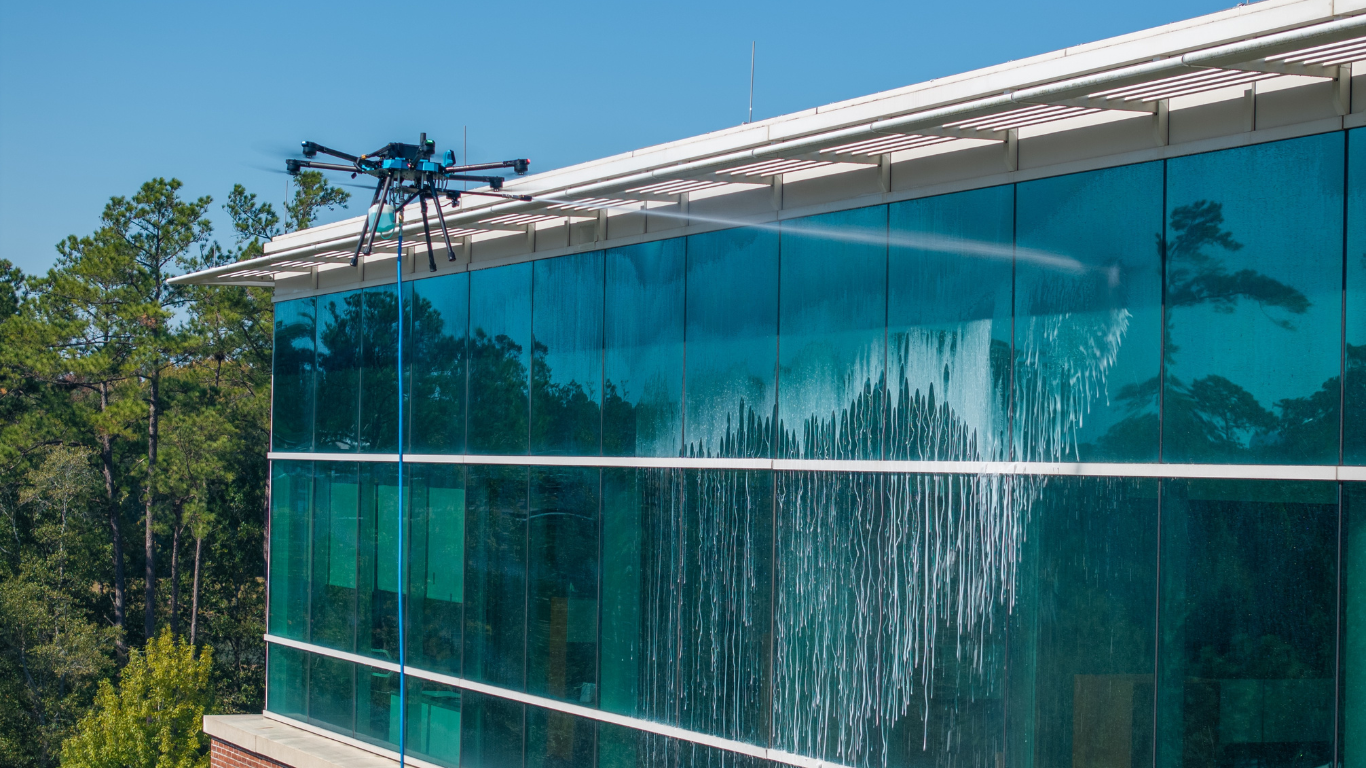
Deionized Water Systems: A game-changer for reducing costs, as it eliminates the need for harsh detergents, reduces drying time, and leaves no residue.
-
Drone Inspections: Drastically reduce the need for site visits and expensive lift rentals by providing high-resolution imagery for precise cleaning needs assessment.
-
Self-Cleaning Coatings (Photocatalytic): A higher initial cost that can pay for itself by reducing cleaning frequency by 50% or more on suitable surfaces.
-
Maintenance-Access Infrastructure: Permanent Davit arms or tracks installed during construction eliminate future rental costs for external cleaning platforms.
Taxonomy of Risk and Compounding Maintenance Liabilities How To Reduce Facade Cleaning Costs
The primary risk in budget-conscious cleaning is the “degradation cycle.” A manager chooses an inexperienced crew for a low-bid wash. The crew uses high-pressure equipment, which compromises the facade’s air barrier or sealant joints. Water ingress follows, causing unseen structural damage. The building looks clean for three months, but the underlying maintenance debt grows. True cost reduction requires vetting for technical capability to avoid these compounding, multi-phase liabilities.
Governance, Monitoring, and Adaptive Stewardship
The most effective approach to how to reduce facade cleaning costs is to institutionalize the maintenance protocol:
-
The Baseline Survey: Establish a clear metric of what “clean” looks like for your specific material to avoid over-cleaning.
-
Periodic Review Cycles: Every three years, assess if the local environmental conditions have changed—such as new construction or changes in urban traffic—which might shift the soiling patterns.
Metrics for Quantitative and Qualitative Success How To Reduce Facade Cleaning Costs
-
Quantitative: Total expenditure per square meter of facade per year, adjusted for cleaning frequency.
-
Qualitative: Comparative photography from standardized viewpoints, and visual assessment of joint and sealant integrity post-wash.
-
Documentation: Maintain a “Facade Care Ledger” that archives every cleaning event, the methodology used, and the chemical composition applied. This is critical for defending the asset’s condition over the long term.
Dissecting Common Maintenance Fallacies
-
Myth: “All dirt is the same.” Correction: Organic growth, soot, and chemical oxidation require entirely different management strategies. Using one for all is a waste of resources.
-
Myth: “Cleaning frequency should be set at construction.” Correction: Cleaning should be adjusted based on the building’s actual performance in its micro-climate, not a theoretical schedule from a brochure.
-
Myth: “Cleaning is purely aesthetic.” Correction: Cleaning is the removal of corrosive materials that otherwise shorten the lifespan of building components.
In summary, the path to cost reduction is paved with data, precise detailing, and a rejection of the “one-size-fits-all” cleaning contract. By focusing on how to reduce facade cleaning costs through better design and targeted, physics-based interventions, owners can protect their investments from the silent, compounding damage of neglect and the excessive costs of poorly considered maintenance. The ultimate objective is a facade that maintains its integrity and appearance through thoughtful, minimal, and highly efficient intervention.